Juice quality is shaped at every stage of production, not only during pressing. Fruit condition, washing, crushing, oxidation, temperature and storage all affect the final taste, colour and freshness.
Even the best equipment cannot fully correct poor raw material or mistakes made earlier in the process. So, which factors matter most?
Start With the Right Fruit
Fruit variety, ripeness and freshness all influence the flavour, aroma, acidity, colour and yield of the final juice.
Fruit does not need to look perfect. Produce that is too small, irregularly shaped or unsuitable for retail can still be excellent for processing. However, rotten, mouldy or fermented fruit should be removed before production, as it can affect the entire batch.
The time between harvesting and processing also matters. The longer fruit is stored – especially in unsuitable conditions – the more its quality can deteriorate.
Preparation Has a Direct Effect on Quality
Before pressing, fruit must be sorted, washed and prepared consistently.
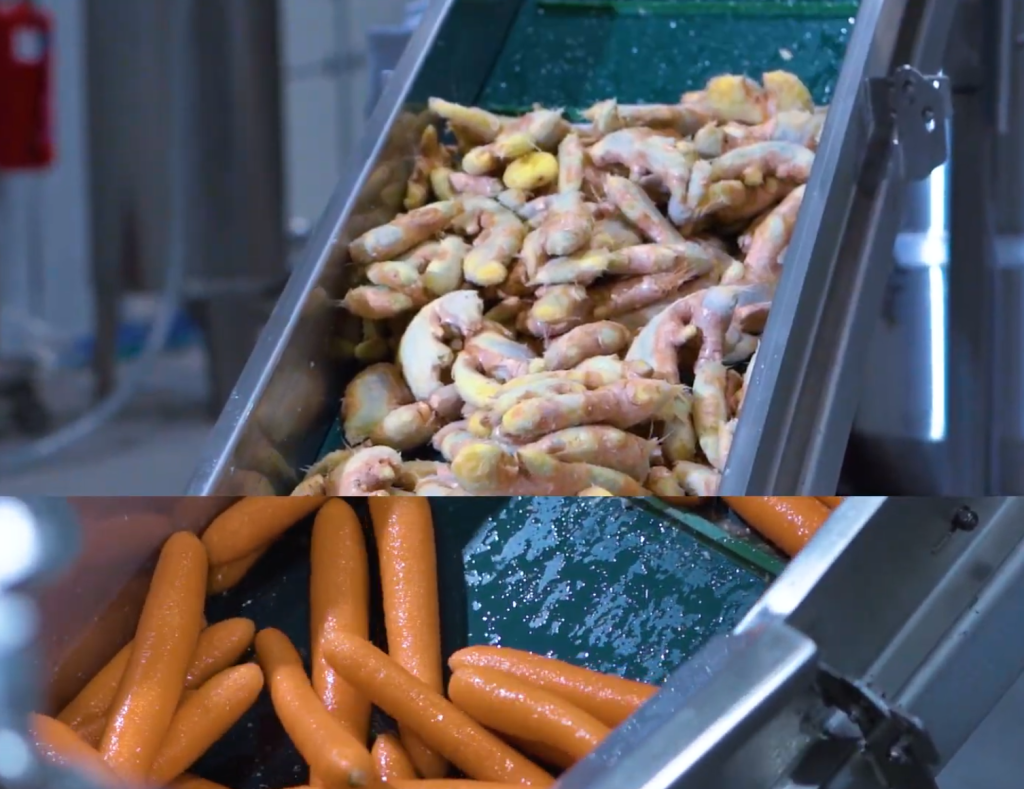
Washing removes soil, leaves and other unwanted material, while sorting prevents spoiled fruit and foreign objects from entering the production line. Equipment such as the fruit and vegetable washer AQUA 3000 can be used for intensive cleaning, while the fruit bubble washer elevator mill AQUAMILL combines washing, elevation and crushing within one continuous process.
Crushing is particularly important because the mash structure affects both extraction and juice clarity. Mash that is too coarse can reduce yield, while mash that is too fine may introduce more solids and make filtration more difficult.
The mill and press should therefore be selected to work together rather than treated as two unrelated machines.
Pressing Is About More Than Maximum Yield
Producers naturally want to extract as much juice as possible, but higher pressure does not automatically mean better juice.
Overly aggressive pressing may force more fine particles into the liquid or extract unwanted flavours from skins, seeds and other fruit material. A controlled pressing process should balance:
- Juice yield
- Clarity
- Flavour
- Production speed
- Amount of suspended solids
A belt press such as the POWERPRESS (300 – 3000) applies gradual pressure to the fruit mash, allowing juice to be extracted continuously. However, the final result still depends on fruit condition, mash consistency and correct machine settings.
Pressing should also follow crushing without unnecessary delays. Once fruit is broken down, it becomes more exposed to oxygen, which can quickly affect colour and aroma.
Limit Oxidation Throughout the Line
Oxidation is one of the main reasons juice begins to brown or lose its fresh character. It can happen during crushing, pressing, pumping, tank storage and filling.
It is not always possible to remove oxygen completely, but exposure can be reduced by keeping the process continuous and avoiding:
- Excessive splashing
- Open transfers between machines
- Juice standing in uncovered containers
- Long waiting periods between production stages
A properly sized juice collection tank with a pump helps transfer juice smoothly from the press to the next stage. The capacity of the tank, pasteurizer and filler should match the press output so that juice does not remain waiting unnecessarily.
Control Temperature Without Overprocessing
Fresh juice is sensitive to temperature. If it remains warm for too long, flavour changes and microbial activity can develop more quickly.
For longer shelf life, juice is commonly pasteurized. The goal is to apply enough heat to make the product stable without unnecessarily affecting its aroma, colour or fresh taste.
Continuous-flow pasteurizers such as HEAT or ECO HEAT systems allow producers to control the treatment temperature as the juice moves towards filling. The correct settings depend on the product, packaging and required shelf life.
The filling stage must also be compatible with the selected process. For example, bag-in-box and stand-up pouch products may be filled using systems such as MINIFLOW or DOUBLE FLOW, while bottled products can move into automated filling and capping equipment such as MONOBLOCK 5.
Matching Clarification and Storage to the Product
Not every juice needs to be crystal clear. Many consumers prefer a natural, cloudy finish, while others expect minimal visible sediment. Clarification methods should always align with your target product – and often, the simplest approach yields the best results.
Natural Settling vs. Mechanical Filtration
Before investing in complex machinery, consider simple tank settling. Allowing freshly pressed juice to rest undisturbed in a storage tank is the most cost-effective and energy-efficient way to improve clarity. Gravity naturally forces heavier pulp and coarse particles to the bottom, allowing clean juice to be gently drawn off from the top.
If faster output or higher precision is needed, mechanical options like a beverage filter or plate filter can strip away coarse particles and unwanted sediment without stripping away the authentic character of naturally cloudy juice.
Protecting Quality in Storage and Packaging
Processing is only half the battle – storage conditions directly dictate shelf life and final taste:
- Hygiene & Sizing: Food-grade tanks must be easy to sanitize and correctly sized to minimize headspace.
- Air Exposure: Protect juice from oxygen to prevent oxidation, off-flavors, and unwanted discoloration.
- Final Packaging: Ensure containers are securely sealed and stored at controlled temperatures suited to the specific product type.
Juice Quality Is the Result of the Whole Process
There is no single machine that determines juice quality.
The final result depends on the relationship between raw material, washing, crushing, pressing, oxidation control, pasteurization, filtration, filling and storage. When these stages are properly matched, producers can achieve more consistent flavour, better appearance, reliable shelf life and efficient use of their fruit.